
Buying at Auction

The fast bidding, unfamiliar language, and headlines about record-breaking sales can make auction houses feel intimidating. It is easy to assume that everyone in the room knows something you don’t—or that auctions are reserved for collectors with extraordinary budgets.
Learning how auctions work—and doing your homework before bidding, whether in person or online—is part of the fun. Here are the basics, along with a few details that can make a difference when you buy.
Learn the language
- Lot: An individual item or group of items offered for sale.
- Estimate: The auction house’s suggested selling range. The final price may fall below or above it.
- Reserve: The minimum price at which a lot may be sold, usually kept confidential.
- Hammer price: The winning bid, before fees and taxes.
- Buyer’s premium: The auction house’s fee added to the hammer price.
What the reserve means for you
At Christie’s and Sotheby’s, the reserve must be at or below the low estimate. Phillips generally follows the same rule, although its New York conditions allow an exception when a third party has made an irrevocable bid—a binding commitment to bid—above the low estimate. In that case, the reserve is set at that commitment.
A work estimated at $3,000–$5,000 might have a reserve of $2,500, allowing a purchase below the estimate if competition is limited. If bidding stops below the reserve, the work remains unsold. That result may reflect the seller’s expectations rather than a problem with the work.
Without a reserve, there is no minimum selling price. This can create an opportunity, but it can also attract more bidders. Christie’s notes that no-reserve lots can encourage strong competition—so “without reserve” does not necessarily mean a bargain.
Assess the work, wherever you are
Whether you are buying online or bidding in person, auction houses provide condition reports, detailed photographs, and access to specialists to help you assess a work before bidding.
Start with the catalogue entry: medium, dimensions, provenance—the ownership history—and edition information for prints and photographs. For additional information or images, contact the specialist handling the lot.
Although online bidding is now commonplace—Christie’s reports that 81% of bids in the second half of 2025 were placed online—photographs and condition reports have their limitations. For significant purchases especially, review the available information carefully and seek independent advice where appropriate. Sotheby’s buyer’s guide explains the scope and limitations of condition reports.
Understand the buyer’s premium
The buyer’s premium is based on your winning bid. Auction houses typically charge different percentages on different portions of that amount, called tiers.
A $5,000 winning bid falls entirely within the first tier. At Christie’s or Sotheby’s, the 28% premium adds $1,400, bringing the subtotal to $6,400 before taxes, shipping, and any other applicable charges. At Phillips’ standard 29% rate, the subtotal is $6,450.
Rates may vary by location and category. The table illustrates the standard schedules for New York fine-art sales as of October 2026. Each percentage applies only to the portion within its band. See the full schedules at Christie’s, Sotheby’s, and Phillips.
How premiums influence bidding
Auction houses also use premiums to attract business. In May 2024, Sotheby’s reduced its buyer’s premium to encourage bidding, but accompanying changes to sellers’ terms proved less attractive to consignors. It introduced a revised structure in February 2025. Read about the changes here.
A lower premium leaves more room in your bidding budget, but competition still determines the hammer price.
Phillips’ Priority Bidding offers reduced premiums for eligible buyers who commit at or above the low estimate at least 48 hours before a live auction and meet the payment requirements. Watch auctions and timed online-only sales are excluded. It can offer savings, provided you have completed your research before committing. See Phillips’ eligibility and rates.
Set your limit before bidding
Allow for the premium, taxes, shipping, insurance, and any framing or conservation. Confirm collection deadlines and potential storage charges, then work backward from your total budget to establish your maximum bid.
An estimate of $3,000–$5,000 is not a prediction of your final bill. And a $5,000 budget does not mean you can place a $5,000 bid.
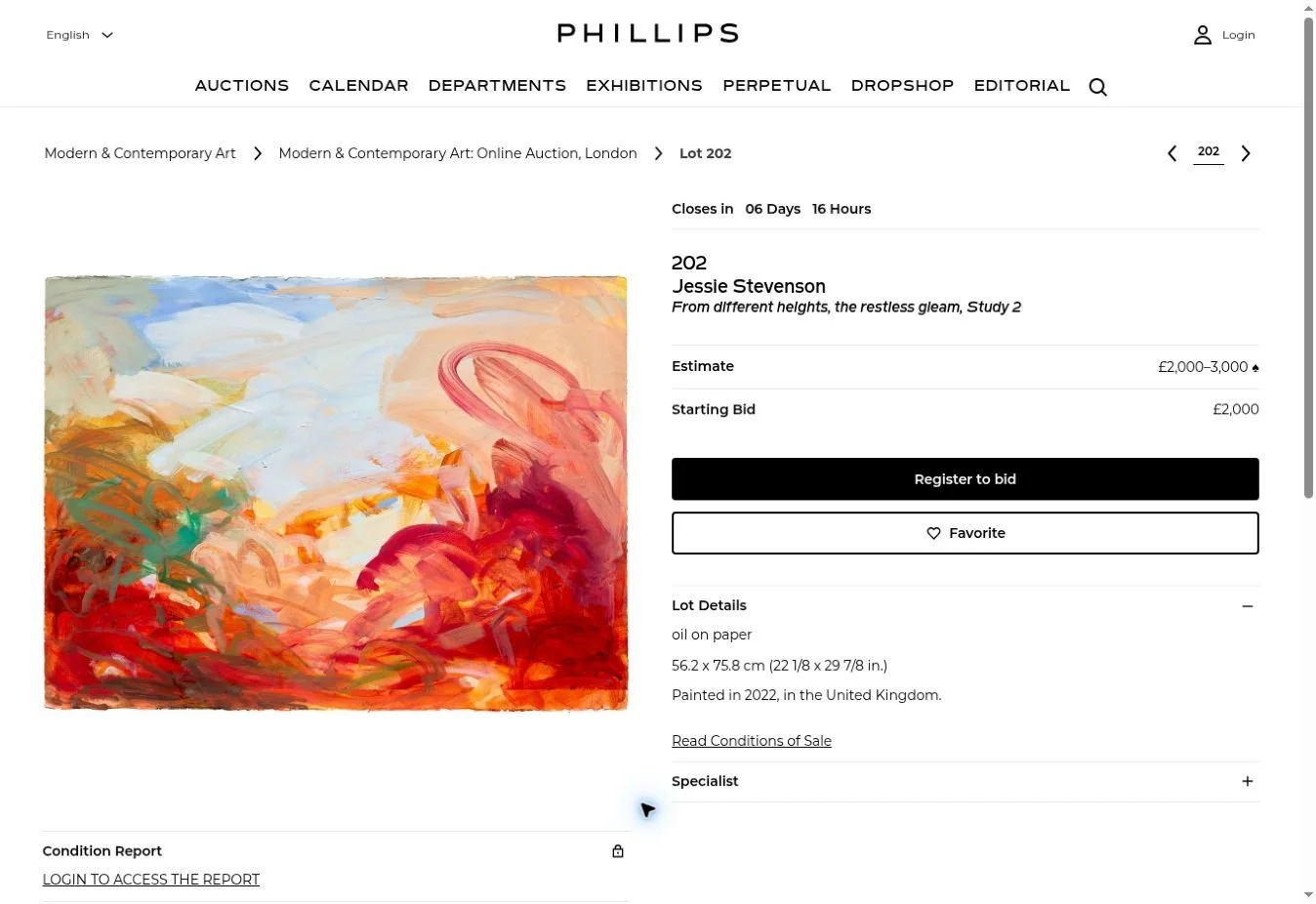
Choose how to participate
Buyers can join live auctions or participate in timed online-only sales. The format determines when and how you bid:
Live auctions: An auctioneer conducts the sale in real time. Depending on the auction, you can bid in person, online, by telephone, or leave an absentee bid authorizing the house to bid up to your maximum.
Timed online-only auctions: Bidding stays open over a stated period. You can place the next bid or set a maximum that allows the system to bid automatically on your behalf. Check the closing rules, as late bids may extend the deadline.
Register early, confirm the time zone, and familiarize yourself with the bidding process. Before placing a bid, review the conditions of sale and payment deadlines so you understand your obligations if you win. Find instructions at Christie’s, Sotheby’s, and Phillips. Whatever method you choose, keep your limit in view. The ease of clicking again should not change what you are comfortable spending.
For more questions or assistance buying at auction, contact Nova Art LA.
© Nova Art LA, LLC. All rights reserved.